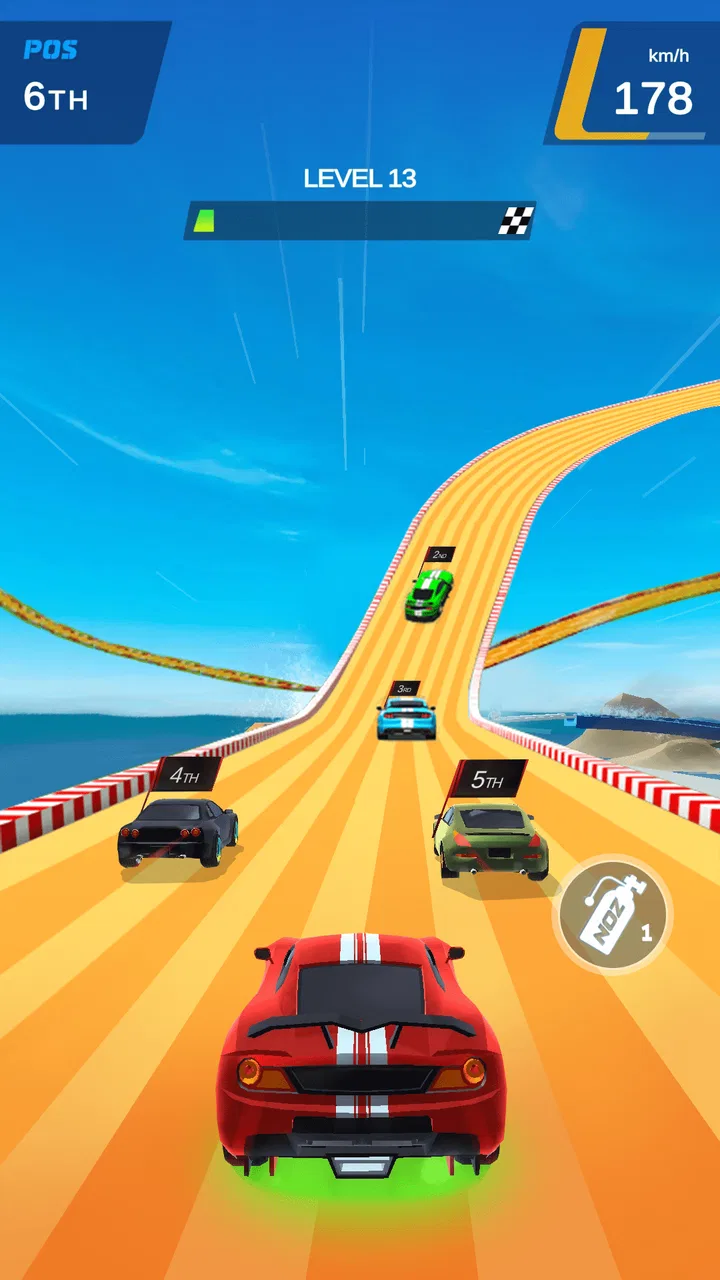
Car Racing 3D: Racer Master
- 4.8
- Rating
- 10.00M
- Installs
- Free
- Price

 Analysis by App-foxy
Car Racing 3D: Racer Master is the kind of mobile racing game I open when I want quick action rather than a long career-management session. It comes from Flyyes, Inc., is free to download, and focuses on straightforward 3D driving for players who want to get moving without first learning a complicated collection of menus. I found its appeal easy to understand: it aims for immediate road-based excitement, with the car and the next stretch of track taking priority over everything else.
That simplicity is also the key to deciding whether it belongs on your phone. If you enjoy short racing sessions, quick restarts, and the satisfaction of gradually becoming more consistent, it can be a pleasant choice. If you are looking for a deep simulation, a carefully structured championship, or the tuning detail of a console-style racer, I would set expectations lower. This is best approached as a casual racing game with an arcade-minded rhythm, not as a replacement for a full racing simulator.
How I settle into a reliable racing routine
My normal starting point is deliberately simple. I play a few races without trying to optimize every decision, paying attention to how the car responds, how much room I need around other traffic or obstacles, and whether my first instinct is to overcorrect. That warm-up matters because mobile racing often feels less about one spectacular maneuver and more about repeating clean movements. A player who learns the game’s visual rhythm will usually improve faster than someone who constantly changes direction in a panic.
You May Also Like

 Blood Strike: 2.5 Anniversary
Blood Strike’s Loadouts Turn Every Drop Into a Tactical Gamble
A close look at Blood Strike’s custom loadouts: how fast access to signature weapons reshapes its battle royale rhythm, rewards preparation, and narrows the gap between fights.

 Pandora - Music & Podcasts
Pandora’s Music Is Easy to Start, but Harder to Recover
Pandora’s strength is its low-effort path from a seed to a station. Its weak spot is how much confidence it asks you to place in connection, setup, and quiet recovery.

 8 Ball Pool
 Is Built on Rivalries, Rematches, and Routine
A close look at the rivalries, rematches, shared routines, and unanswered safety questions that turn a quick pool match into a persistent mobile community.

 Samsung Music
’s Quiet Strength Is Playing What You Already Own
Its reach comes less from spectacle than from dependable access to a personal library. That simplicity is both the app’s strongest retention engine and its ceiling.

 AccuWeather: Weather Radar
AccuWeather Review: A Quick, Clear Forecast for Everyday Decisions
For everyday plans, the best forecast is the one you can understand quickly. AccuWeather makes rain timing, radar, and local conditions easy to act on, with a few trade-offs.

 Hill Climb Racing
Why Hill Climb Racing Still Turns Crashes Into One More Run
A tiny car, a bumpy hill and one more upgrade: Hill Climb Racing keeps resurfacing because its simple chaos makes every near-miss feel personal.
More From Our News Desk



The most useful baseline workflow is to treat each attempt as a short practice loop. On the first run, I look ahead and identify where the road narrows or where a turn demands more preparation. On the next, I try to enter that section with fewer sudden inputs. After that, I focus on finishing the whole run without sacrificing control for a small burst of speed. This approach makes the game feel less random and gives each restart a clear purpose.
I also recommend beginning with a relaxed grip on the phone. It sounds minor, but tense hands make small steering corrections much larger than intended. I keep the device stable, use the same posture for several attempts, and avoid changing my control style halfway through a session. That consistency helps me tell the difference between a genuine driving mistake and a control habit that needs adjustment.
For an everyday example, imagine having a few minutes before a commute or while waiting for an appointment. I would play one or two focused runs instead of trying to force a long session. The game suits that situation because its racing premise is immediately understandable, and a short attempt still feels like a complete activity. When I have more time, I use repeated runs to build consistency rather than simply chasing a lucky result.
The best early habit is learning to finish cleanly before chasing speed. A fast opening followed by a poor final section teaches less than a controlled run in which I understand why each mistake happened. This is especially important for newcomers who may assume that aggressive movement is always the winning approach. In practice, smooth timing is usually easier to repeat.
What I check before trying to improve
I take a quick look through the available settings before settling into regular play. I do not change everything at once. Instead, I adjust one control-related option, play several attempts, and decide whether the change actually helps. This prevents a common problem in mobile racers: changing the interface, steering behavior, and general play style together, then having no idea which adjustment made the experience better or worse.
Control comfort should come first. If the default arrangement makes my thumbs cover important parts of the screen or forces awkward movements, I give myself time to adapt before judging the game. A familiar layout is often more valuable than a theoretically faster one. Players who switch between several racing games may need a short adjustment period because each title encourages slightly different timing and hand placement.
Graphics settings are worth treating practically rather than emotionally. A sharper presentation can make the road easier to read, but a stable experience is more important than maximum visual detail during a race. If the phone becomes warm or the game feels less responsive after extended play, I prefer a more comfortable setting over a prettier one. I cannot enjoy the scenery if I am missing turns because my attention is split between the road and performance concerns.
Sound is another setting I consider according to where I am playing. At home, audio can make the session feel more lively and may help me stay aware of the pace of a run. In public, I use a lower volume or play silently so that the game remains convenient rather than intrusive. This is not a feature that changes the racing itself, but it affects whether I will actually return to the game during ordinary parts of the day.
The free entry point is helpful, although the in-app purchase range of $0.99 to $17.99 per item means I would be careful around optional spending. I prefer to play long enough to understand the normal progression before buying anything. That gives me a clearer sense of whether a purchase improves a problem I genuinely have or merely encourages me to skip a part of the experience I have not yet learned to enjoy.
Parents should also notice that the game carries an Everyone age rating. That makes it easier to consider for a broad audience, but I would still explain in-app purchases to younger players and use the device’s purchase protections when appropriate. A suitable age label does not remove the need for sensible spending boundaries on a shared phone or tablet.
Patterns that make repeated runs more productive
Once I know the basic controls, I stop treating every race as an isolated event. I divide the road into small visual sections and choose one goal for each attempt. For example, I might concentrate on entering turns with a wider line, then use the next run to reduce unnecessary steering. This creates a repeatable practice method without requiring a formal training mode or a complicated setup.
One useful pattern is to look beyond the car instead of staring directly at it. When I focus only on the vehicle, obstacles and changes in direction seem to arrive too quickly. Looking toward the next visible section gives me more time to prepare. This is a small change, but it makes the game feel less frantic and helps me avoid last-second movements that often turn a manageable situation into a crash or lost momentum.
I also try to separate recovery from ambition. If a run begins badly, I do not automatically respond by making riskier moves. I first restore a stable line, then decide whether the remaining section allows me to regain time. That habit is useful in any short racing game because one mistake does not always ruin the entire attempt. It also prevents frustration from turning a minor error into a chain of increasingly desperate decisions.
Another practical technique is to use consistent restart rules. I restart when I am clearly repeating the same early mistake and can name what I intend to change. I continue when the opening was imperfect but still gives me a chance to practice the later road. This saves time and makes each session more informative. Restarting constantly can create the illusion of practice while actually limiting the sections I learn.
For players who enjoy competition with themselves, I suggest measuring progress by fewer corrections rather than by speed alone. A run with a calmer line, fewer abrupt movements, and a stronger finish is meaningful even if the result does not immediately look impressive. Over several sessions, that control usually becomes the foundation for faster attempts.
These habits are particularly useful on a phone because attention is easily interrupted. If a notification, conversation, or change in grip breaks concentration, I pause mentally and begin the next attempt with a simple target. I do not try to compensate for lost focus by driving more aggressively. The game is more enjoyable when I accept that a short session can be practice rather than a perfect performance.
Where the game feels lighter than dedicated racers
Car Racing 3D: Racer Master is easier to approach than many deeper racing alternatives. I do not need to study realistic vehicle behavior, remember a large roster of circuit layouts, or spend a long time preparing a car before driving. That makes it suitable for players who want an accessible arcade experience and for anyone who finds simulation-heavy games tiring on a small screen.
The trade-off is depth. Players who love detailed tuning, precise tire behavior, extensive multiplayer structures, or a long career arc may find the experience too streamlined. A dedicated racing game is the better choice when the appeal comes from mastering a specific vehicle, comparing technical setups, or spending an evening building a detailed progression path. This title works better when the road itself is enough to hold your attention.
I also would not choose it as my first recommendation for someone who wants a realistic driving lesson. The game’s purpose is entertainment, not teaching road safety or reproducing every consequence of real-world driving. Its casual format is a strength for quick play, but it means that real driving knowledge should come from proper instruction rather than from mobile racing habits.
The game’s broad reach is reflected in its 10M+ installs and its 4.7 average from around 19 thousand ratings. Those figures suggest that the straightforward format has found a sizable audience, but they do not change the personal fit question. A popular casual racer can still feel too light for an enthusiast, while a player who dislikes complex menus may appreciate exactly that restraint.
I would also keep the free-to-play structure in mind. Starting without an upfront charge lowers the barrier to trying it, yet optional purchases can influence how some players approach progression. My advice is to decide on a personal spending limit before playing, especially if the game becomes part of a daily routine. Enjoyment should come from the driving loop first, not from feeling pressured to buy something after a difficult run.
What experienced players can and cannot optimize
After several sessions, the biggest gains come from repeatable execution rather than secret shortcuts. I would be suspicious of any claim that promises a hidden trick that transforms every race. The more dependable path is to learn the visual cues, keep inputs measured, and use the settings that make the road easiest for you to read. That may sound less dramatic, but it is the kind of improvement that survives from one session to the next.
There is also a limit to how much settings work can accomplish. A better control arrangement can remove friction, and a comfortable visual setting can make play steadier, but neither replaces practice. If I keep missing the same section, I do not keep searching through menus for a solution. I return to the road, choose one correction, and test it over multiple attempts.
Phone hardware and screen size can affect comfort as well. A larger display may give some players a clearer view, while a smaller phone can be easier to hold during quick sessions. I would not judge the game from a single awkward attempt on an unfamiliar device. Instead, I would play long enough to establish whether the issue is the screen, the controls, or my own adjustment period.
Version 2.0.3 is the version I would look for when installing, and the game requires Android 6.0 or later. That makes device compatibility an important first check for anyone using an older phone. On a compatible device, I would still keep the operating system and available storage in reasonable condition, because general phone performance affects how comfortable any action game feels.
One limitation I notice with this kind of design is that repetition can become less satisfying for players who need constant novelty. The short-session structure is convenient, but it can also make the game feel narrow if you expect a large variety of activities. I enjoy it more when I set a modest goal for a session, such as improving control through one difficult section, rather than expecting every launch to deliver a completely new experience.
Who should install it and who should pass
I would recommend it to someone who wants a free racing game that is easy to understand, quick to start, and suitable for casual bursts of play. It is a good fit for a player who enjoys repeating a route to improve timing, prefers direct driving to complicated management, and does not need a realistic simulation. The Everyone rating also makes it a reasonable candidate for a family device, provided purchase controls are handled sensibly.
I would be more cautious for a racing enthusiast who expects a rich garage, extensive customization, or a serious competitive structure. That player may be happier with a more specialized alternative, even if it takes longer to learn and demands more storage or attention. Choosing the deeper option is worthwhile when the details of cars, tracks, and long-term progression are the main reason you play.
I would also skip it if you dislike retry-based gameplay. The basic appeal depends on being willing to run a course again, notice a mistake, and try a slightly better approach. If repeating a short section feels like a chore rather than a challenge, the game may not hold your attention for long. On the other hand, players who enjoy small improvements can find that loop surprisingly satisfying.
For a friend asking whether the game needs a powerful modern phone, I would say to start by checking the Android requirement and then judge comfort during actual play. The minimum operating system is Android 6.0, but a compatible device is only the first part of the experience. Screen responsiveness, battery condition, and how comfortably the phone can be held will matter during longer sessions.
For someone asking whether to spend money immediately, my answer is no. I would first learn the controls, test the normal racing loop, and decide whether I am returning because I enjoy driving or because I feel pushed to improve a result. Free access makes that trial straightforward, while the available item purchases are best treated as optional rather than necessary to understand the game.
My final view after settling into its rhythm
Car Racing 3D: Racer Master succeeds when I use it for what it is: a direct, accessible mobile racing game built around quick road action and repeatable attempts. Flyyes, Inc. keeps the entry point approachable, and the free price makes it easy to try without committing to a purchase. I appreciate that I can open it for a short session, focus on one driving habit, and close it without needing to manage a large system around the race.
Its limitations are just as clear. The lighter structure will not satisfy everyone, especially players who want simulation depth, elaborate progression, or a broad set of competitive tools. Optional purchases also mean that I would play with a spending boundary in mind. The game is strongest for casual racers who value immediacy and personal improvement more than exhaustive content.
My recommendation is therefore positive but specific: install it if you want a simple 3D racing experience and enjoy the process of making repeated runs cleaner. Start with stable controls, check the settings that affect comfort, practice by sections, and judge progress by consistency before speed. It is most rewarding when treated as a focused pick-up-and-play racer, not as a complete driving simulation.
With an Everyone age rating, a current version of 2.0.3, and a large existing audience, it is an easy game to test for yourself. I would give it a fair session rather than making a decision after one awkward race. If the basic road loop feels satisfying once your hands settle into the controls, it can become a dependable little time-filler. If you are still looking for deeper car management after that adjustment, a more specialized racing game will be the better destination.
FAQs for Car Racing 3D: Racer Master
01What are the system requirements for Car Racing 3D: Racer Master?
Car Racing 3D: Racer Master requires Android 5.0 or iOS 11.0 and above. It’s optimized for both smartphones and tablets, ensuring smooth gameplay. A minimum of 2GB RAM is recommended for optimal performance. Ensure you have at least 500MB of free storage space to download and install the app.
02Is Car Racing 3D: Racer Master free to play?
Yes, Car Racing 3D: Racer Master is free to download and play. However, it does offer in-app purchases for items like premium cars and customizations. While these purchases can enhance the gaming experience, they are entirely optional and not necessary to enjoy the game.
03Does Car Racing 3D: Racer Master require an internet connection?
Car Racing 3D: Racer Master can be played offline, making it perfect for users who are on the go and do not always have internet access. However, certain features, such as leaderboards and online multiplayer modes, require an internet connection to function.
04What kind of cars and tracks are available in the game?
Car Racing 3D: Racer Master features a wide variety of cars, from sports cars to classic models, each with unique attributes. The game includes multiple tracks with different environments, like cityscapes and desert trails, offering diverse challenges and terrains to master.
05How does the game handle updates and new content?
The developers of Car Racing 3D: Racer Master regularly release updates to improve gameplay, fix bugs, and introduce new content, such as cars and tracks. Keeping the app updated ensures you have access to the latest features and a smoother gaming experience.
Pros
- Impressive 3D graphics for immersive racing.
- Wide variety of cars and customization options.
- Smooth controls for an enjoyable experience.
- Regular updates with new tracks and features.
- Offline mode available for uninterrupted play.
Cons
- In-app purchases can be quite expensive.
- Ads may interrupt gameplay frequently.
- Limited music selection for background tracks.
- Some tracks require unlocking with real money.
- Occasional bugs cause game crashes.

Car Racing 3D: Racer Master
Gallery